

Self-consumption
Use more of what your roof produces.
Producing solar electricity is a first step. Younergy analyses your production and usage to use a larger share of what is produced locally.
The benefits
What self-consumption provides in practical terms.
Use more of your solar energy
Consume a larger share of the electricity produced directly at your home.
Reduce your electricity purchases
Less energy bought from the grid when your production covers your needs.
Gain energy autonomy
Batteries, heat pumps, charging stations or smart control allow you to exploit more of your local production.
How your car recharges
Charging that follows your energy, hour by hour.
Depending on your solar production and consumption, the charging station continuously adjusts the power sent to your vehicle throughout the day.

Several levers, not just one solution
Five ways to use more of what you produce.
01
Shift certain usages
Run a washing machine, dishwasher or water heater when solar production is available.
02
Store
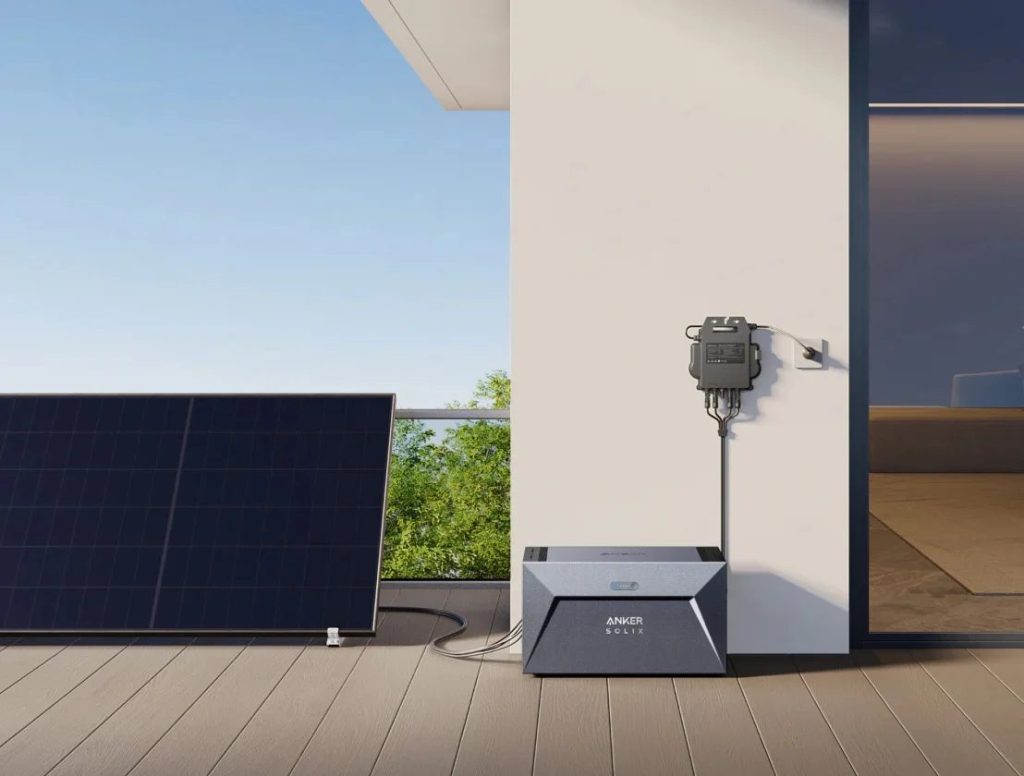
Use a battery to keep part of the surplus and release it later in the day.
03
Heat
A heat pump can use part of the photovoltaic production depending on the building’s needs and the system installed.
04
Recharge
Electric vehicle charging can become a significant usage to shift towards solar production hours.
05
Control
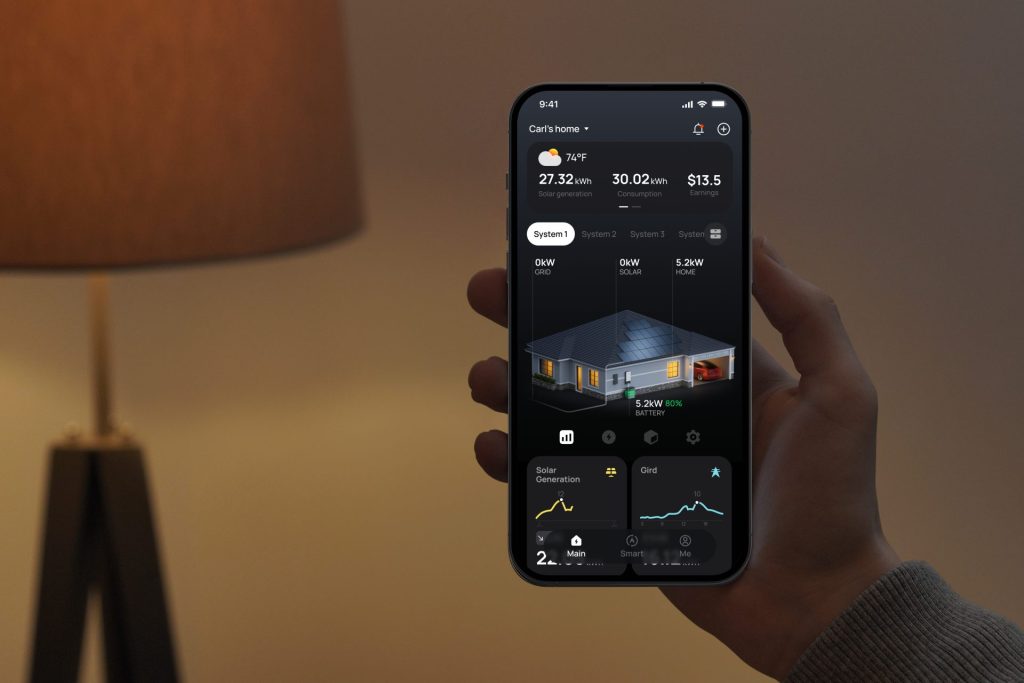
A Smart Energy system can coordinate certain compatible equipment based on the household’s production and needs.
Your consumption matters as much as your production
Two similar installations, two different results.
For the same production, the self-consumption rate depends mainly on when and how your household consumes.

Same installed power
Consumption concentrated in the evening.
A large part of your electricity is used after solar production hours. Your consumption and production rarely overlap.
Surplus sent to the grid
When the house consumes little during production hours, a significant part of the surplus is fed into the grid rather than used directly.
Your main usages occur after production
Cooking, vehicle charging or other equipment may be more in demand when solar production is already starting to decrease.
Direct self-consumption is lower
Production and consumption overlap less. A battery or the control of certain usages can allow part of this energy to be shifted.
Same installed power
Consume during your solar installation’s production
By consuming more during solar hours, you take more direct advantage of the energy produced at your home.
Your solar covers more of your needs
When the house consumes during production hours, a larger share of the solar electricity can be used directly.
Less surplus goes back to the grid
Part of the energy that would have been injected is consumed on-site by equipment active during the day.
Self-consumption increases naturally
Production and consumption meet more often, which allows for better value from the installation without necessarily adding storage.
Consuming more of your production does not mean covering all your needs.
The self-consumption rate measures the share of your solar production used at home. The autonomy rate indicates the share of your needs covered by this energy. You can therefore consume all your production and still need the grid.
Switch to self-consumption.
Let us study your energy profile.
Current or future production, consumption profile, heating, mobility, existing equipment: Younergy identifies where the real possibilities to use more energy locally lie.

Scaling up
Self-consumption can also be shared.
In a building, a condominium (co-ownership) or certain configurations grouping several consumers, locally produced electricity can also be shared and used by several participants. Different models exist in Switzerland depending on the project configuration.
Our projects
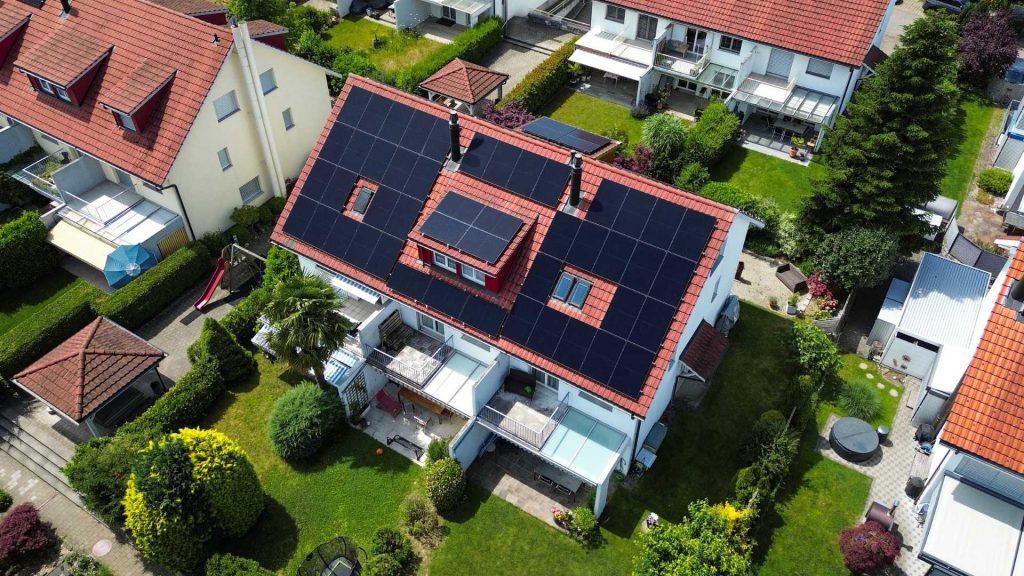
Houses that consume their own energy.




FAQ
It is the share of electricity produced by your solar installation that you use directly at home, instead of feeding it into the grid.
Self-consumption measures the share of your production that you use yourself. Autonomy measures the share of your consumption covered by your own production. These are two different questions, based on two different calculation bases.
By bringing your consumption closer to your production hours: shifting certain usages, storing surplus in a battery, or controlling compatible equipment.
No. It increases the self-consumption potential by keeping the surplus for later, but interesting results are possible without a battery, depending on your consumption profile.
Yes. A heat pump can use part of the photovoltaic production for heating or hot water, depending on the building and the system installed.
Yes, by charging during production hours or when surplus is available, depending on your charging station and your installation.
Our services
All your energy solutions in one place
-

Produce
Solar
-
Use
Storage
-

Use
Heat pump
-

Use
e-mobility
-
Control
Smart Energy
-
Control
Maintenance